Latest research shows that GLP-1 drugs offer a novel strategy for addiction treatment. However, additional research is needed to fully understand the mechanisms of action, optimize their use, and ensure their safety and efficacy across different populations and types of addiction.
What Are GLP-1 Drugs?
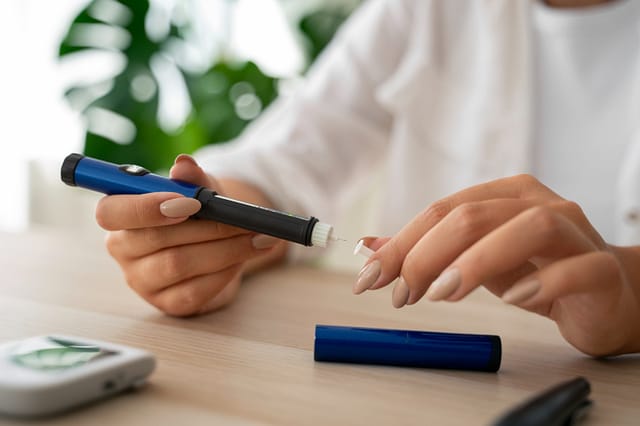
GLP-1 drugs are a class of medications used to treat type 2 diabetes mellitus (T2DM) and, in some cases, obesity. They act as activators that bind to GLP-1 receptors, producing several metabolic effects.1
These medicines mimic the naturally occurring gut hormone GLP-1 to regulate blood sugar, slow digestion, and increase feelings of fullness. The FDA has approved several drugs in this class for managing Type 2 diabetes, reducing cardiovascular risk, and promoting weight loss.These drugs include Exenatide, Liraglutide, Dulaglutide, and Semaglutide.
What Are The Use of GLP-1 in Substance Use?
Drug, alcohol, and tobacco use disorders affect millions of people. Despite decades of research, treatment options are not enough to meet the challenges.
GLP‐1 drugs approved for treating Type 2 diabetes mellitus and obesity have recently received attention as a potential anti‐addiction treatment.
Research showed that some people reported losing interest in alcohol and cigarettes after starting the medications.
Earlier observational studies also found links between GLP-1 treatment and lower risks of alcohol and cannabis use disorders, opioid overdose, and alcohol-related hospitalization.2
What Can be The Mechanism of Action?
To investigate, the research team analyzed electronic health records from 606,434 U.S. veterans with type 2 diabetes. The precise mechanisms of GLP‐1 drugs’ actions on addiction have yet to be established. The GLP‐1 drugs can also cross the blood–brain barrier and can modulate dopamine signaling.
Dopamine is a critical neurotransmitter and hormone primarily responsible for regulating the brain’s reward system, motivation, pleasure, motor control, and executive functions. Just as GLP-1s can reduce food cravings, they may reduce persistent cravings for substances like alcohol, nicotine, and opioids.
3
No clear, well‐defined circuit‐level mechanism has yet been identified. Although a few human studies have been initiated, further research is needed to establish this fact.
What Are The Statistics?
During the study period, the researchers followed 524,817 participants. The first group developed alcohol, cannabis, cocaine, nicotine, opioid, or other substance use disorder.
For the second group, those with a pre-existing substance use disorder, 81,617 participants experienced drug-related emergency department visits, hospitalization, mortality, overdose, or suicidal ideation or attempt.
For patients treated for diabetes, GLP-1 use was associated with a 14% reduced risk of developing any substance use disorder. Risk of developing each substance use disorder also declined significantly:4
- 18% for alcohol
- 14% for cannabis
- 20% for cocaine and nicotine
- 25% for opioids
Among patients with pre-existing substance use disorder, GLP-1s reduced hospitalizations, overdoses, and deaths related to substance use.
After three years, there was a 30% reduction in emergency department visits, a 25% reduction in hospitalizations, a 40% reduction in overdoses, and a 50% reduction in drug-related deaths.
“GLP-1s may offer a dual benefit for patients with chronic conditions like diabetes or obesity who are also struggling with a substance use disorder: one medication can treat both conditions at once.
With millions of people already taking GLP-1 medications and use continuing to grow, these effects on preventing and treating substance use disorders could have a significant impact at the population level.
What Is The Future?
Looking ahead, the findings support the case for clinical trials to test GLP-1 medications as treatments for addiction. The trials are powered to measure effects on overdose and drug-related death.
The study suggests GLP-1 drugs may also quiet the relentless craving that drives addiction across substances. “People taking these drugs for obesity often describe a quieting of ‘food noise.”
GLP_1 drugs can be a future in not treating one addiction at a time, but targeting that common biologic signal, that common craving across addictions. Moving beyond food noise to drug noise, GLP-1s are quieting the roar of addiction.
Sources:
- Collins L, Costello RA. Glucagon-like peptide-1 receptor agonists. In: StatPearls. StatPearls Publishing; 2026. Accessed June 5, 2026. http://www.ncbi.nlm.nih.gov/books/NBK551568/
↩︎ - Klausen MK, Thomsen M, Wortwein G, Fink‐Jensen A. The role of glucagon‐like peptide 1 (GLP‐1) in addictive disorders. British Journal of Pharmacology. 2022;179(4):625. doi:10.1111/bph.15677
↩︎ - Alves GAM, Teranishi M, Ortega ACT de CG, James F, Arachchige ASPM. Mechanisms of glp-1 in modulating craving and addiction: neurobiological and translational insights. Medical Sciences. 2025;13(3):136. doi:10.3390/medsci13030136 ↩︎
- Kerry. GLP-1 medications get at the heart of addiction: study. WashU Medicine. March 4, 2026. Accessed June 15, 2026. https://medicine.washu.edu/news/glp-1-medications-get-at-the-heart-of-addiction-study/ ↩︎

 Health Square desk